News Center
For many individuals and couples exploring in vitro fertilization in the United States, the first question is rarely about success rates alone—it is about money. Fertility treatment in the U.S. is among the most advanced in the world, but it is also among the most expensive, and the way clinics structure their pricing can vary dramatically. Two clinics may advertise similar headline prices, yet the final bill can differ by tens of thousands of dollars once medications, genetic testing, and repeat cycles are factored in. Understanding how American IVF pricing actually works is therefore the single most useful step a patient can take before committing to a program. This guide breaks down every major cost component, compares typical price ranges across different types of clinics and regions, and explains how to evaluate which fertility center genuinely offers strong value for your specific situation.
Unlike many countries where fertility treatment is standardized under national health systems, IVF in the United States operates in a largely privatized, fee-for-service market. Each reproductive endocrinology practice sets its own package prices, defines its own inclusions and exclusions, and structures refunds or guarantee programs differently. A quoted "IVF cycle price" from one clinic may include anesthesia, monitoring, and the first frozen transfer, while another clinic's quote may cover only the egg retrieval and fresh embryo transfer—leaving medications, biopsy fees, and storage charges as separate line items.
This lack of standardization creates three common problems for patients:
Because of this, experienced patients learn to request an itemized estimate—a written breakdown of every anticipated charge for a full treatment journey, not just a single cycle. Clinics that provide transparent, detailed cost sheets tend to be easier to budget for, regardless of whether their headline number is high or low.
A full IVF journey in the U.S. typically consists of several distinct phases, each with its own pricing structure. Below is a detailed breakdown based on commonly published fee schedules from reproductive medicine centers across the country.
Before treatment begins, both partners undergo a diagnostic workup. For the female partner, this usually includes ovarian reserve testing (AMH, FSH, estradiol), antral follicle count via ultrasound, hysterosalpingogram (HSG), infectious disease screening, and sometimes a saline sonogram or hysteroscopy. Male partners typically provide one or two semen analyses. Some clinics charge a flat new-patient fee; others bill each test separately. Patients who arrive with recent, valid test results from another facility can often reduce this phase significantly, so it is worth asking whether outside labs are accepted.
Injectable gonadotropins (such as Gonal-F, Follistim, and Menopur) combined with GnRH antagonists or agonists represent one of the largest variable costs. The final amount depends on dosage, which is driven by age, ovarian reserve, and protocol type. A younger patient with a high antral follicle count may need relatively modest doses, while a patient with diminished ovarian reserve may require aggressive stimulation. Many clinics partner with specialty fertility pharmacies that offer discount programs or manufacturer copay cards; asking about these before filling prescriptions can save hundreds or even thousands of dollars.
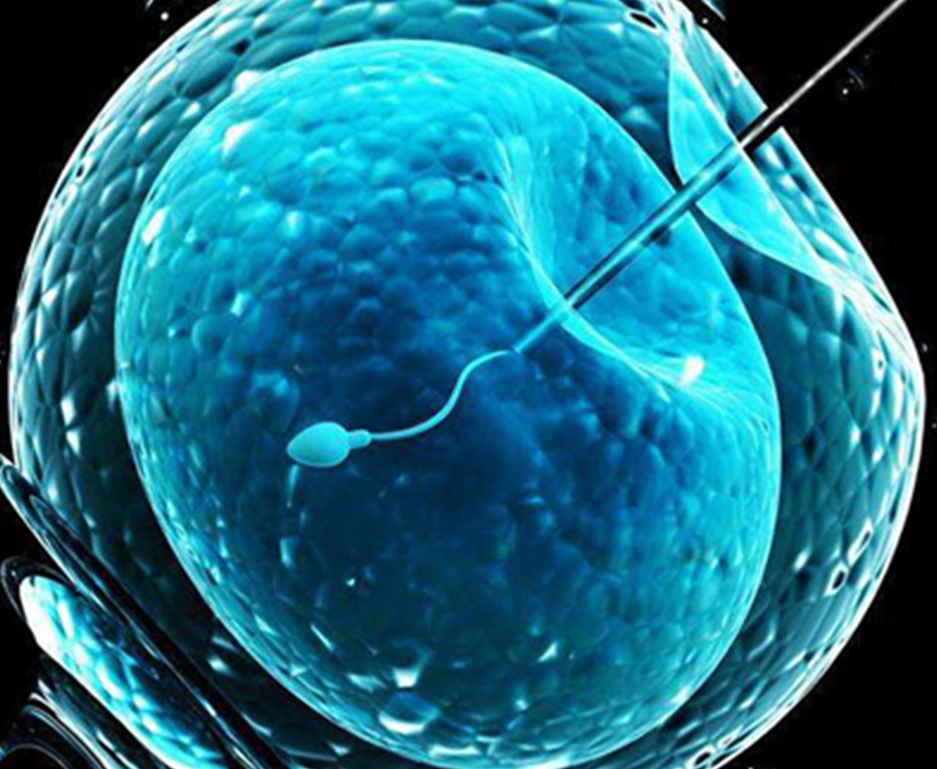
This is the core "procedure" charge and usually includes ultrasound monitoring visits during stimulation, the retrieval itself under light sedation, and basic embryology services such as fertilization and embryo culture. Intracytoplasmic sperm injection (ICSI), used in a majority of U.S. cycles, is often billed as an add-on of roughly $1,000 to $2,500. Anesthesia may or may not be included—always confirm. Some centers also charge separately for extended culture to the blastocyst stage (day 5–6), typically $800 to $1,500.
PGT-A (aneuploidy screening) has become standard practice at many American clinics, particularly for patients over 35. Pricing is usually structured as a biopsy fee per embryo plus a flat lab fee per batch—commonly around $250–$400 per embryo biopsied plus $1,500–$3,000 for the testing itself. PGT-M (for monogenic inherited conditions) and PGT-SR (for structural rearrangements) cost considerably more because they require customized probe development, often adding $3,000–$5,000 or more to the cycle.
Because most U.S. clinics now favor a freeze-all approach followed by a medicated or natural frozen transfer, the FET is essentially a guaranteed additional expense. It covers endometrial preparation monitoring, the thaw, and the transfer procedure. Note that if the first transfer does not result in pregnancy and frozen embryos remain, each subsequent FET is a separate charge—this is where multi-cycle packages and refund programs become relevant.
Annual storage fees are easy to overlook in initial budgeting. Most clinics charge $600–$1,000 per year for embryo storage, with discounts for multi-year prepayment. Long-term storage adds up, so patients planning extended timelines should factor this in.
| Cost Component | Typical U.S. Range (USD) |
|---|---|
| Diagnostics and consultation | $500 – $3,500 |
| Medications | $3,000 – $8,000 |
| Retrieval, lab, ICSI, anesthesia | $8,000 – $15,000 |
| PGT-A (if chosen) | $2,000 – $7,000 |
| Frozen embryo transfer | $3,000 – $5,500 |
| Cryostorage (annual) | $500 – $1,200 |
| Realistic single-cycle total | $18,000 – $35,000+ |
Patients should treat any quote significantly below $15,000 all-in with careful scrutiny, and any quote above $40,000 for a standard first cycle with a request for a full itemization. Neither extreme is automatically wrong, but both deserve questions.
Geography matters more in American fertility care than most patients expect. Clinics in major metropolitan areas with high operating costs—San Francisco, New York City, Boston, Los Angeles—tend to price at the top of the national range. By contrast, highly respected programs in lower-cost regions such as the Midwest, the Mountain West, and parts of the South often charge 20–40% less for comparable services while maintaining solid outcomes. Patients who live near state borders sometimes find that crossing into a neighboring state meaningfully reduces their total spend.
Clinic type also shapes pricing:
Because a single IVF cycle succeeds only about 40–50% of the time for patients under 35—and considerably less for older patients—many American clinics now sell multi-cycle bundles or "shared risk" refund programs. These typically cost $30,000–$60,000 for two to three fresh cycles plus associated frozen transfers, with a substantial refund (often 70–100% of the program fee) if no live birth occurs. Whether such a program represents good value depends heavily on individual prognosis: younger patients with good ovarian reserve may be paying a premium for protection they are statistically unlikely to need, while patients with diminished reserve may find the programs closed to them or priced accordingly.
Insurance coverage remains a patchwork. As of recent years, roughly 20 U.S. states have some form of fertility insurance mandate, though the strength varies enormously. States such as Illinois, New Jersey, Massachusetts, New York, Colorado, Connecticut, Maryland, Delaware, and New Hampshire have relatively robust requirements for large-group employer plans, while many states have none at all. Patients should check three things with their insurer: whether diagnostic testing is covered (it often is, even when treatment is not), whether IVF itself is a covered benefit, and whether the clinic they are considering is in-network. An out-of-network clinic can erase the value of otherwise excellent coverage.
Practical tip: Ask each clinic for its "self-pay package" price even if you have insurance. Some clinics offer discounted cash packages that, for patients with high-deductible plans, cost less than running everything through insurance.
Consider two hypothetical patients to see how total costs diverge in practice.
Patient A: 31 years old, tubal factor infertility, good ovarian reserve, at a mid-priced Midwest clinic. Diagnostics $1,200; medications $3,800; retrieval and lab (with ICSI) $10,500; PGT-A on 6 embryos $3,400; frozen transfer $3,800; storage $700. Estimated total: roughly $23,400.
Patient B: 39 years old, diminished ovarian reserve, at a premium coastal clinic. Diagnostics $2,800; medications $7,500 (higher doses); retrieval and lab $14,500; PGT-A on 3 embryos $2,600; frozen transfer $4,800; storage $900. Because of her age and reserve, her physician recommends planning for two cycles, bringing the projected two-cycle total to roughly $66,000, or less if a multi-cycle discount applies.
The lesson is that "cheapest clinic" and "best value" are not the same thing. Patient B might receive more value from a clinic with strong experience in poor-responder protocols and transparent multi-cycle pricing, even if its per-cycle sticker price is higher, because fewer wasted cycles ultimately mean lower total cost.
The following established programs represent different models of American fertility care and pricing. They are listed for informational purposes; none of these descriptions constitutes an endorsement, and patients should verify current pricing, outcomes, and program policies directly with each center.
When researching any center, request its most recent SART (Society for Assisted Reproductive Technology) report, which publishes verified live-birth rates by age group. Compare those rates against price quotes to form a rough "cost per live birth" estimate—this is a more meaningful metric than the sticker price of a single cycle.
Published SART data does not show a straightforward correlation between price and outcomes. Some moderately priced regional programs report live-birth rates comparable to premium coastal centers. Price often reflects real estate, marketing, and service model as much as laboratory quality.
Packages almost always exclude medications, and many exclude PGT, ICSI, anesthesia, or additional transfers. Patients should ask specifically: "What is the maximum I could spend in a worst-case scenario for one complete cycle, including medications?"
For patients with favorable prognoses, paying upfront for a multi-cycle guarantee can cost more than paying per cycle. Run the numbers using your own age and diagnosis before enrolling.
Medication discounts usually come from manufacturer copay programs, specialty pharmacy competition, or international prescription assistance—not from lower quality. Always purchase through licensed U.S. pharmacies, but do compare prices between them.
Good preparation is one of the few cost-saving measures entirely within a patient's control. Patients who enter treatment in good metabolic health often require fewer adjustment cycles and lower medication doses. Practical steps include maintaining a balanced diet rich in protein and folate several months before stimulation, moderating intense exercise during stimulation to reduce ovarian torsion risk, avoiding alcohol and tobacco, and managing thyroid or insulin-related conditions with your physician beforehand. After embryo transfer, most clinics advise normal daily activity rather than strict bed rest—prolonged rest has not been shown to improve implantation and can add unnecessary time away from work. Attending all scheduled monitoring appointments on time is equally important, since missed or delayed visits can force protocol changes and repeat bloodwork, both of which add cost.
Emotional preparation matters as well. Building a financial cushion for a possible second cycle, joining patient communities to learn from others' billing experiences, and using clinic financial counselors early in the process all reduce the stress that often accompanies treatment decisions made under time pressure.
The question "which clinic offers the best value" has no universal answer, because value in fertility care is personal. It is the intersection of verified outcomes for your age and diagnosis, transparent and complete pricing, a laboratory and medical team you trust, and a total cost you can realistically sustain across the likely number of cycles. A clinic that charges $20,000 per cycle with honest itemization and strong results for your profile may deliver far more value than a $14,000 quote that balloons to $32,000 with add-ons and repeat transfers.
Patients who approach American IVF pricing as a research project—collecting itemized estimates, cross-checking SART data, comparing medication sources, and reading refund program terms line by line—consistently report better financial outcomes and less regret than those who choose based on a single advertised number. Fertility treatment is a significant investment under any circumstances; treating the selection process with the same diligence you would apply to any major financial decision is the most reliable way to ensure that every dollar spent moves you closer to the outcome you are hoping for.