News Center
In vitro fertilization (IVF) has become one of the most widely used assisted reproductive technologies in the United States, and California stands out as one of the most active states for fertility care in the country. For couples and individuals considering treatment, two questions usually come first: how much does IVF actually cost, and where should treatment be done? This guide walks through the full financial picture of IVF in the United States, examines the specific cost structure patients encounter in California, and profiles several well-established fertility centers across the state, along with practical advice on preparation, insurance, financing, and avoiding common pitfalls.
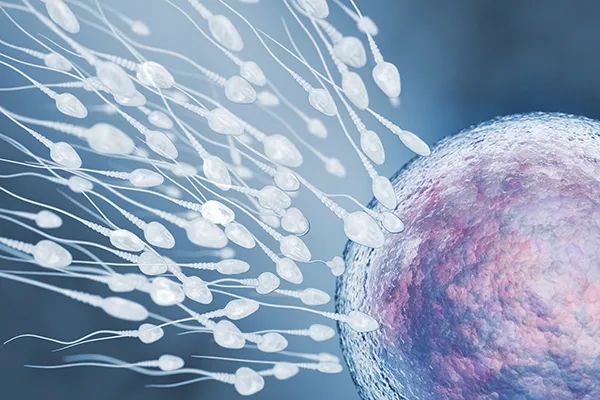
IVF is a multi-step medical process in which eggs are retrieved from the ovaries, fertilized with sperm in a laboratory, and the resulting embryos are transferred to the uterus. A complete cycle typically involves ovarian stimulation with injectable medications, ultrasound monitoring, an egg retrieval procedure under light sedation, laboratory fertilization, embryo culture over several days, and finally an embryo transfer, which may be fresh or frozen.
In the United States, fertility care is largely delivered through private reproductive endocrinology practices and hospital-affiliated programs. The Centers for Disease Control and Prevention (CDC) collects and publishes clinic-specific success rate data through its National ART Surveillance System, and the Society for Assisted Reproductive Technology (SART) maintains a public database where patients can review verified outcomes for every member clinic. This transparency is one of the strengths of the American system: patients can compare clinics using real, audited numbers rather than marketing claims.
California has one of the largest concentrations of fertility practices in the country. The state's large population, strong medical infrastructure, and long-standing insurance mandates have created a competitive market with numerous experienced reproductive endocrinologists, advanced embryology laboratories, and a wide range of treatment options. For many patients, particularly those in Los Angeles, the San Francisco Bay Area, San Diego, and Orange County, high-quality care is available within a short drive. For international patients, California's clinics are also a frequent destination due to their experience with coordinated care for travelers.
The single most important thing to understand about IVF pricing in the United States is that the advertised "cycle cost" is rarely the full cost. Most clinics quote a base fee that covers the core medical procedures, while medications, genetic testing, and follow-up procedures are billed separately. Patients who budget only for the base fee are frequently surprised when their total spending ends up 40% to 80% higher than expected.
Across the United States, a single IVF cycle without genetic testing generally ranges from $12,000 to $25,000, with the national average falling around $15,000 to $20,000. This base fee typically includes:
In California, base cycle pricing tends to sit at the higher end of the national range, commonly between $15,000 and $24,000, reflecting the state's higher operating costs, laboratory standards, and demand. Clinics in Los Angeles and the Bay Area often quote toward the upper end, while some practices in inland or suburban areas may be somewhat lower.
Fertility medications are billed separately from the clinic fee and are usually purchased through specialty pharmacies. Injectable gonadotropins (such as Follistim, Gonal-F, and Menopur), GnRH antagonists, and trigger medications typically cost between $3,000 and $7,000 per cycle. The exact amount depends heavily on the stimulation protocol and the patient's ovarian reserve:
| Medication Category | Typical Cost Range | Notes |
|---|---|---|
| Gonadotropins (FSH/LH injections) | $2,500 – $5,500 | Largest medication expense; dose depends on ovarian reserve and age |
| GnRH antagonist (e.g., Cetrotide, Ganirelix) | $300 – $800 | Prevents premature ovulation during stimulation |
| Trigger shot (hCG or GnRH agonist) | $100 – $500 | Leuprolide triggers are often cheaper than hCG |
| Luteal support (progesterone, estrogen) | $200 – $1,000 | Needed after retrieval and transfer; higher for frozen transfers |
Patients with polycystic ovary syndrome or a low ovarian reserve may need adjusted protocols that shift medication costs up or down. Many specialty pharmacies offer manufacturer discount programs, and some clinics have arrangements that reduce out-of-pocket medication spending, so it is worth asking about these options before filling prescriptions.
Preimplantation genetic testing has become standard practice at many American clinics, particularly for patients over 35 or those with recurrent pregnancy loss. PGT involves biopsying embryos at the blastocyst stage and sending samples to a genetics laboratory. Typical costs include:
A patient with eight blastocysts undergoing PGT-A might add $3,000 to $5,000 to the total cycle cost. Whether genetic testing is worthwhile depends on individual circumstances, and a good clinic will discuss the trade-offs honestly rather than treating it as an automatic add-on.
Many clinics now favor a "freeze-all" strategy, in which embryos are vitrified and transferred in a later, hormonally calibrated cycle. If a frozen transfer is not included in the base package, expect $3,500 to $6,000 per FET, covering monitoring, the thaw, the transfer procedure, and medications. Patients should also ask about embryo storage fees, which typically run $500 to $1,200 per year, though some clinics bundle the first year into the cycle price.
Realistic total: A patient completing one IVF cycle in California with PGT-A, a frozen embryo transfer, and standard medications should plan for a total out-of-pocket range of roughly $25,000 to $38,000 without insurance coverage. Patients who need more than one cycle, which is common, should budget accordingly or explore multi-cycle packages.
Insurance coverage for IVF in the United States varies enormously by state and by employer. California has been a pioneer in this area. Under California Health and Safety Code and Insurance Code provisions, large-group health plans regulated by the state must offer infertility coverage as an option, and since 2020, the state's Fertility Preservation Law (SB 600) requires large-group plans to cover standard fertility preservation services, such as egg or sperm freezing, for patients facing medically necessary treatments like chemotherapy that could impair fertility.
In practice, this means:
For patients paying out of pocket, several strategies can reduce the financial burden:
Success rates are the most searched metric for any fertility clinic, but they are also the most misunderstood. The CDC and SART report outcomes by age group, and the differences are dramatic: live birth rates per intended egg retrieval for patients under 35 at strong programs often exceed 50%, while rates for patients over 42 may fall below 10% using their own eggs. A clinic's headline numbers reflect its patient mix as much as its laboratory quality, because clinics that accept more complex, older, or previously failed patients will naturally show lower averages.
When comparing clinics, patients should look at:
California hosts dozens of fertility practices, from boutique single-location offices to large multi-site networks. The four programs below are widely recognized in the fertility community and illustrate the range of options available across the state. Each has its own character, and the right fit depends on a patient's location, diagnosis, budget, and personal preferences. No ranking is implied.
HRC Fertility is one of the largest fertility networks in Southern California, with multiple locations spanning the greater Los Angeles area, Orange County, and the Inland Empire. The practice has been active for more than three decades and performs thousands of cycles annually. Its scale brings advantages: a large, experienced embryology team, in-house genetic counseling, and broad insurance contracting. HRC is also known for its experience serving international patients, with staff who coordinate travel logistics, remote monitoring, and condensed treatment timelines for patients who cannot remain in California for a full cycle. Pricing at HRC falls within the typical Southern California range, and the practice frequently offers multi-cycle packages and financing partnerships. Patients who value having many physician options and locations close to home often gravitate toward this network.
CCRM (Colorado Center for Reproductive Medicine) expanded into California with locations in the San Francisco Bay Area and Orange County, bringing with it a national reputation built on laboratory science and research. CCRM's model emphasizes standardized embryology protocols across its network, and the organization invests heavily in time-lapse embryo imaging and laboratory quality control. The practice is particularly known for its work with patients who have experienced repeated implantation failure or recurrent pregnancy loss, and for its data-driven approach to endometrial receptivity and embryo selection. CCRM's pricing is at the higher end of the California range, and its programs tend to be protocol-intensive. Patients seeking a research-oriented program with deep laboratory expertise often shortlist CCRM, especially for complex or previously unsuccessful cases.
Affiliated with the Keck School of Medicine of the University of Southern California, USC Fertility combines academic medicine with a relatively intimate clinical setting. The program has a long history in Southern California and is known for its work with patients facing complex medical conditions, including cancer-related fertility preservation and patients with underlying health issues that make pregnancy higher risk. Being embedded in an academic medical center means patients have access to multidisciplinary care, maternal-fetal medicine consultation, and hospital-level resources if complications arise. Cycle volumes are smaller than at large networks, which some patients prefer for the continuity of seeing the same physician throughout treatment. USC Fertility is a strong consideration for patients whose medical complexity requires an academic setting.
Pacific Fertility Center is a long-established independent practice in San Francisco serving the Bay Area. The center has built its reputation on a combination of high cycle volume, a sophisticated in-house embryology laboratory, and a patient experience that many reviewers describe as personalized despite the practice's size. PFC offers the full range of modern services, including PGT, elective egg freezing, and frozen embryo transfer protocols, and its physicians are active in professional societies and clinical research. For patients living in Northern California, the center's central San Francisco location makes monitoring appointments manageable for commuters from across the Bay Area. Pricing is consistent with Bay Area norms, and the practice works with major financing lenders and offers package options for multi-cycle treatment.
| Clinic | Region | Known For | Approximate Base Cycle Cost |
|---|---|---|---|
| HRC Fertility | Southern California (multi-site) | Large network, international patient services, broad insurance access | $16,000 – $22,000 |
| CCRM Fertility | Bay Area & Orange County | Laboratory science, complex and repeat-failure cases | $18,000 – $25,000 |
| USC Fertility | Los Angeles | Academic medicine, medically complex patients, fertility preservation | $16,000 – $23,000 |
| Pacific Fertility Center | San Francisco | High-volume independent practice, personalized care, strong embryology | $17,000 – $24,000 |
These figures are estimates based on publicly available pricing trends and should be verified directly with each clinic, as fees change annually and individualized quotes depend on the specific protocol recommended.
Consider a representative scenario: a 34-year-old woman and her partner living in Irvine, California, with two years of unexplained infertility and one failed IUI. They choose a Southern California clinic and complete the following sequence:
Their total came to approximately $33,700, of which insurance covered about $6,000, leaving roughly $27,700 out of pocket, financed through a 24-month fertility loan. The first frozen transfer of a chromosomally normal embryo resulted in a successful pregnancy. This example illustrates why asking for a written, itemized estimate before starting treatment is one of the most important steps a patient can take.
Misconception 1: One cycle is usually enough. In reality, cumulative success across multiple cycles is significantly higher than single-cycle success. Many patients under 38 achieve pregnancy within two to three cycles. Planning finances and emotions around multiple attempts, rather than a single make-or-break cycle, leads to better decision-making.
Misconception 2: The most expensive clinic is automatically the most effective. Price correlates only loosely with outcomes. Some mid-priced practices deliver results comparable to premium-priced programs. What matters more is laboratory quality, physician experience with your specific diagnosis, and how well the clinic communicates.
Misconception 3: IVF guarantees a baby. No ethical clinic will promise a live birth. Even with genetically normal embryos transferred, implantation can fail for reasons that are not fully understood. Reputable physicians discuss realistic probabilities based on age and diagnosis rather than offering guarantees.
Misconception 4: Genetic testing guarantees a healthy baby. PGT-A reduces the risk of transferring embryos with chromosomal abnormalities, but it cannot detect every possible condition, and mosaicism results require careful interpretation. It is a powerful tool, not a certainty.
Misconception 5: IVF is only for older patients. A significant share of IVF patients are under 35, dealing with tubal disease, male factor issues, endometriosis, or genetic concerns. Age is one variable among many.
California clinics regularly treat patients who fly in from other states and countries. A typical condensed timeline works like this: initial consultation and preliminary testing are completed remotely or locally before travel; the patient arrives in California around day two or three of the menstrual cycle for baseline ultrasound and bloodwork; ovarian stimulation proceeds for eight to twelve days with local monitoring if the patient returns home mid-cycle; and the patient returns for the retrieval. Frozen embryo transfers can be scheduled as a shorter second trip. Clinics experienced with traveling patients, including HRC Fertility and Pacific Fertility Center, have coordinators who manage this choreography and can recommend nearby accommodation. Patients traveling internationally should also clarify in advance which documents, translations, and lab results they need to bring, and should budget for an extended stay of roughly three to four weeks for the retrieval phase.
The psychological load of IVF is substantial and well documented. Studies consistently show elevated anxiety and depressive symptoms among patients during treatment, particularly after unsuccessful cycles. California clinics increasingly integrate mental health support into care: many employ or refer to psychologists specializing in reproductive health, and RESOLVE, the national infertility association, runs support groups with active chapters in Los Angeles, the Bay Area, and San Diego. Practical strategies that help include setting clear boundaries around who knows about treatment, deciding in advance how many cycles to attempt, scheduling recovery time after retrievals, and treating a failed cycle as medical information rather than personal failure. Partners benefit from explicit conversations about division of responsibilities, injections, appointments, finances, so that one person does not silently absorb the logistical burden.
Navigating IVF in the United States, and in California specifically, rewards preparation. Patients who understand the true cost structure, read success data critically, and choose a clinic whose strengths match their medical situation enter treatment with realistic expectations and far less financial stress. Fertility care in the state continues to advance, with improving laboratory techniques, expanding insurance benefits, and growing support resources, offering more pathways to parenthood than at any point in the past.